Bennett Foddy, deputy director of the Institute for Science and Ethics at Oxford University, makes games about embodiment, and the “neurological magic” in gaming which allows us to inhabit the heroes on screen.
But unlike most artsy, experimental games with a point to make, Foddy’s free Flash games are hilarious, alarmingly addictive and eminently playable. His latest, a fiendishly compulsive rock-climbing simulation called GIRP, is a masochistically difficult game that turns your keyboard into a cliff face.New Smart Phone App Will Block Distracted Driving — But Is It Practical?
Last week Sprint announced that later this year it will offer a smart-phone app, called Drive First, designed to minimize distracted driving. When activated, Drive First will lock the cell phone screen, redirect incoming calls to voice mail, block text-message alerts, and automatically tell incoming texters that, we’re sorry, but the number you are trying to reach is currently driving. The app will allow access to three emergency contacts and GPS navigation devices.
Drive First will be available for Sprint users with Android phones and will cost $2 a month (plus surcharges and taxes and probably an additional overcharge, because while Sprint may care about the safety of America’s youth, it remains, after all, a phone company). The app, which was created by Location Labs, is the latest in a growing line of devices intended to prevent drivers from using cell phones. T-Mobile partnered with Location Labs on a similar program earlier this year, and the April issue of Consumer Reports gives a glimpse of several others, including:
The Mysterious, Cursed Billiards Room Hiding Under an English Lake
It's like something from a children's mystery book—a hidden wooden door, which leads you down stone steps and into a boat for a short underground row to two large doors—and then, into the cavernous ballroom hidden under the lake; green algae coating the tiny windows speckling the dome.
According to those who've dug into Witley Park's past, few know of this sub-water billiards room, and even fewer have actually been allowed inside. Constructed in 1889 by Whitacker Wright, who had done very well in the mining business and built himself a 32-bedroom country manor (below) to fit his extravagant, if slightly-eccentric, tastes.The Human-Powered Home (Electricity Need Not Apply)
Lighting
Who needs lamps, switches and outlets everywhere?
• Solar Tubular Skylights by Solartube, catches direct sunlight and redirects it down an adjustable-length tube, bringing daylight to parts of buildings that would not otherwise have access to natural light. • The Crank LED Flashlight ($49): 30 seconds of cranking gives you up to 10 minutes of use. A full charge gives up to 30 hours of light, with a lifetime expectancy of over 100,000 hours. • InstaLight Clear Dynamo Flashlight ($49): for this flashlight, a few-second squeeze will give you all the light you need.
Kitchen
Who needs electric appliances?
• Manual Espresso Maker by Presso (£78): I've always wanted to try this! Made from recyclable polished aluminum, the Presso is far more compact than a traditional espresso maker. Just fill the steel filter with coffee, place in the chrome holder, add some boiling water to the heat proof cylinder, and slowly squeeze the lever arms down forcing the water through the coffee at high pressure. • Wood and Metal Coffee Grinders (available vintage or from Zassenhaus for $85.99): the original conical burr grinder. Put the beans in the top, crank the handle, open the little drawer, and there you have it. There’s a knurled nut that adjusts the coarseness of the grind, also capable of producing a fine and uniform grind for espresso. • French Press: No filters, no electricity. Just great coffee. • Manual Powered Wheatgrass Juicer ($44.95): the process of crushing and squeezing fruits and wheatgrass (as opposed to masticating them) means you extract more juice, have less heat build up, and preserve more of the vital nutrients. • Mush, the Manual Baby Food Processor (price TBD): this human-powered chopper turns fruit, veggies, and boneless meats into mashed up meals for your little one. • Vortex Hand-Crank Blender by GSI ($99.95): a little muscle power (still functional for weaklings) is all that's needed to run this blender.
Office and Tech
Who needs batteries and cords?
• Human-Powered Paper Shredder ($24): To make the unit work, twist the unit back and forth and the paper to pull the paper through, shredding it as it goes. No batteries, cords, or buttons. • Dahon Ios XL ($1,599): this bike generates electricity while you pedal, enough to charge your iPod! • Hymini Gadget Charger ($50): chargeable by hand crank, solar, or wind, it'll charge all of your 5V gadgets. • Wind-up Radio, Flashlight, and Phone Charger ($44.50): this radio does take batteries, but it doesn't need them. Just wind it up to get it running. • XO Laptop ($100): the latest versions of the "One Laptop Per Child" XO Laptop claims to have achieved a 1:10 power ratio - 1 minute of charging for 10 minutes of usage, or 2 hours of hand cranking to recharge the laptop completely.
Housekeeping
Who needs a vacuum cleaner? Or a washing machine?
• Carpet Beaters (price varies): Is there anything more old school than beating your carpets to get rid of the dirt? Effective and cathartic! • Handcrafted Brooms from Broomchick ($14-$35): Sometimes I think these brooms are too pretty to use, but if you do use them, you know they'll last for a long time. • Durable Dust Pans and Brushes (various prices): I think beautiful, functional household items make cleaning more enjoyable, and thus you're more likely to do it! • The Laundry Pod (price TBD): Yes, this won't wash 2 week's worth of laundry in one go, but smaller, manageable loads are totally doable. • Hand Powered Portable Washing Machine ($49.99): Consider this your arm toning exercises for the day.
Outdoor
Who needs gas-powered lawn mowers, dryers, or ovens?
• Reel Mowers ($115 - $199): Get fit, reduce air and noise pollution, and keeps your neighbors happy. • Cookup Parabolic Solar Oven Cooker (369,95 € incl. tax): a portable solar cooker meant to be taken out on the open road! It can be assembled in minutes and folds up into a handy little carrying case. Made with 100% recyclable, optical polyester, 1 gram of aluminum per square meter, and sustainably-harvested Portuguese wood. • Backyard Clothes Line, particularly the Rotary Clothesline ($279): clean, fresh-smelling, air-and-sun dried clothes... all possible with a good backyard clotheslines.
Interested in learning more? Buy The Human-Powered Home: Choosing Muscles Over Motors ($19.77 from Amazon)
(Images: 1, 9, 10: small-generator.com, all other images as linked)
Cream, Sugar and Some Endo-Exothermic Phase Change Material for Your Hot Coffee?
URI scientist discovers 54 beneficial compounds in pure maple syrup
Preventing Misinformation
Medieval Misinformation
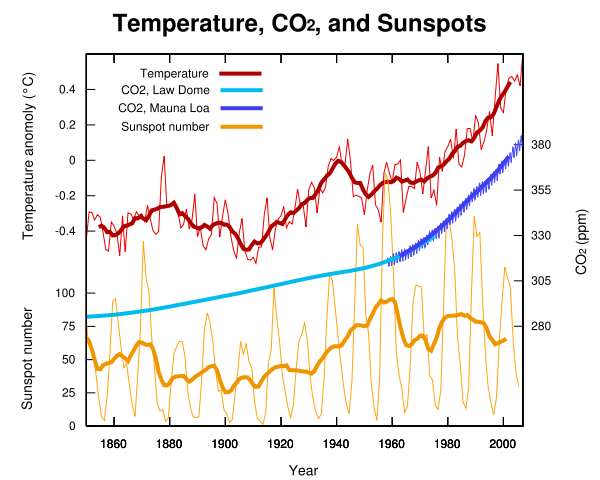
"Earth was considerably warmer during the Roman Warming and the Medieval Warming"
This is simply false. Every peer-reviewed millenial temperature reconstruction shows current temperatures hotter than during the Roman and Medieval periods.
The 1934 Myth
"The hottest records in the USA and Greenland were in the 1930s due to a strong solar cycle."
First of all, the USA and Greenland are not the world. The global surface air temperature iscurrently approximatley 0.6°C hotter than it was during the 1930s. Secondly, today's temperatures are hotter than the 1930s even in the USA and Greenland.
Mid-Century Cooling
"It became cooler from 1940 to 1970. This was due to a weak solar cycle."
The mid-century cooling was not caused by the Sun. In fact, solar activity increased slightly between 1940 and 1970.
Use Dictionary Margins to Store Passwords by Word Association
When you think of Flickr, you might think of photo aperture. Logged into Facebook, it reminds you of college. Use that kind of word association to stash strong passwords in a desk-shelf dictionary, as commenter isaaclyman suggests.
Image via crdotx.
You'll often hear a low-level argument against writing your passwords down, especially anywhere near your computer. But this isn't a Post-It note under the keyboard. It's a small note, written in the margins of dictionary pages that relate specifically to the sites requiring strong, hard-to-memorize passwords. And as one security expert suggests, writing down passwords in a place only you know about is a realistic, sensible compromise.
So stash your NewEgg password near "fetish," and keep your work email tucked next to "endless." Even if some kind of dastardly villain goes page-by-page through a dictionary to find your passwords, they'll need to know how you think about those words to use them against you. And if you ever need to direct a spouse or other trusted friend to certain passwords, you can point them to your Webster's College.
Got a similar trick for hiding password in plain sight? Tell us about it in the comments.
Clever iPhone App Only Shows You the Best of Everything
Rosa Golijan — The Village Voice has just put out a clever iPhone app called Best Of. The app basically uses your location to help you find every place that was voted the "best of" something—be it restaurant or hot dog.
The great thing about the app is that it's "utilizing the picks from publications like Houston Press, LA Weekly, Village Voice, Miami New Times and scores of other city guides and magazines" instead of using some sort of voting system which could be quickly gamed by businesses.
Dictionary Legitimizes Lazy, Overused Online Abbreviations
FYI: In a move that may make English language purists go OMG and LOL, the Oxford English Dictionary has embraced all the abbreviations used in this sentence.
An update on the dictionary's site explains:
iPhone 4 Falls 1,000 Feet And Lives -
(iLounge)
An iPhone 4 fell from of the pocket of a U.S. Air Force Jump Master when he was looking out the plane and plummeted 1,000 feet to the ground, and was completely unharmed, reports iLounge.
After landing, the Jump Master told the story to a friend who downloaded the Find My iPhone app onto his device and got a signal that the guy's phone was 2 miles away in the woods. They hopped on some ATVs and tracked it down. The phone, which had an aftermarket metal backing and was inside a Griffin Motif TPU case, suffered neither scratches nor screen damage. Powering it on, they were pleasantly surprised to find the iPhone was fully operational.
Now just try recreating that drop test in a controlled setting...
A saber-toothed ... herbivore?
Saber teeth—the dangerous, vicious-looking cousin of buck teeth—are a pretty rare feature to find in animals. Mostly, the teeth are associated with several species of extinct cats. All of which were meat eaters.
But not all saber-toothed animals were carnivorous. In a paper published this week in the journal Science, a team of Brazilian scientists describe a delightfully strange creature that had both saber teeth ... and a full set of the sort of flat, wide, heavily worn teeth normally associated with animals that spend their lives chewing (and chewing, and chewing) on fibrous plant material. In fact, the only time you normally see teeth like that are in ruminant herbivores, like cows, which eat nothing but plants.
And that's not the only weird thing going here. The scientists have identified the new fossil as an Anomodont—a diverse suborder of creatures that weren't mammals, but had some mammal-like traits. These weren't ancestors of the mammals that exist today. Instead, we simply share a common ancestor. But, when it comes time to imagine with Anomodonts looked like, that relationship leads to some pretty crazy looking illustrations. Like the one above, where you get a thing that looks kind of like a lizard, but with mammal-like skin. It's an idea that's not totally far-fetched. Some other not-quite-mammals related to Anomodonts have been found with imprints of fur.
But back to our friend, the saber-toothed vegetarian sort-of lizard. If this creature ate only plants, then what the hell were those pointy teeth for? This is a point where scientists can only speculate, but the going theory is that this animal's saber teeth (which, notably, lack the serrations found on carnivorous saber teeth) might have been more about self-defense, or a way to fight rivals of the same species. Sort of like the way that bulls use their horns.
Image: Juan Carlos Cisneros
Tata & MIT Team Up To Generate Power From Water
The Tata Group has signed a deal with the founder of SunCatalytix, MIT scientist Daniel Nocera, who has discovered how to generate energy water. Although the terms of their agreement have not yet been disclosed, this breakthrough technology could bring power to as many as three billion people worldwide. What’s more, Nocera’s technology generates energy more efficiently than solar panels, according to the folks at Fast Company.
Nocera and his team discovered recently that an artificial cobalt and phosphate coated silicon leaf placed into a jar of water generates power. Similar to photosynthesis, this process splits hydrogen from the two oxygen molecules in water to create power from the sun.
One and a half bottles of water, including wastewater, can power a small house, and a swimming pool filled with water refreshed once a day will generate enough energy to run a plant. Although in preliminary testing stages, Nocera and TATA envision that this technology could improve the standard of living for billions of people. One small caveat from us: often places that are short on electricity are also short on water. Being just 45 days old, the TATA/MIT team still has a ways to go to get this incredible technology off the ground.
Via Fast Company